Historic sweet wines
D.O. Malaga protects the classic sweet and naturally sweet wine identity of the province.

D.O. Malaga
The historic designation behind Malaga’s sweet and naturally sweet wines.
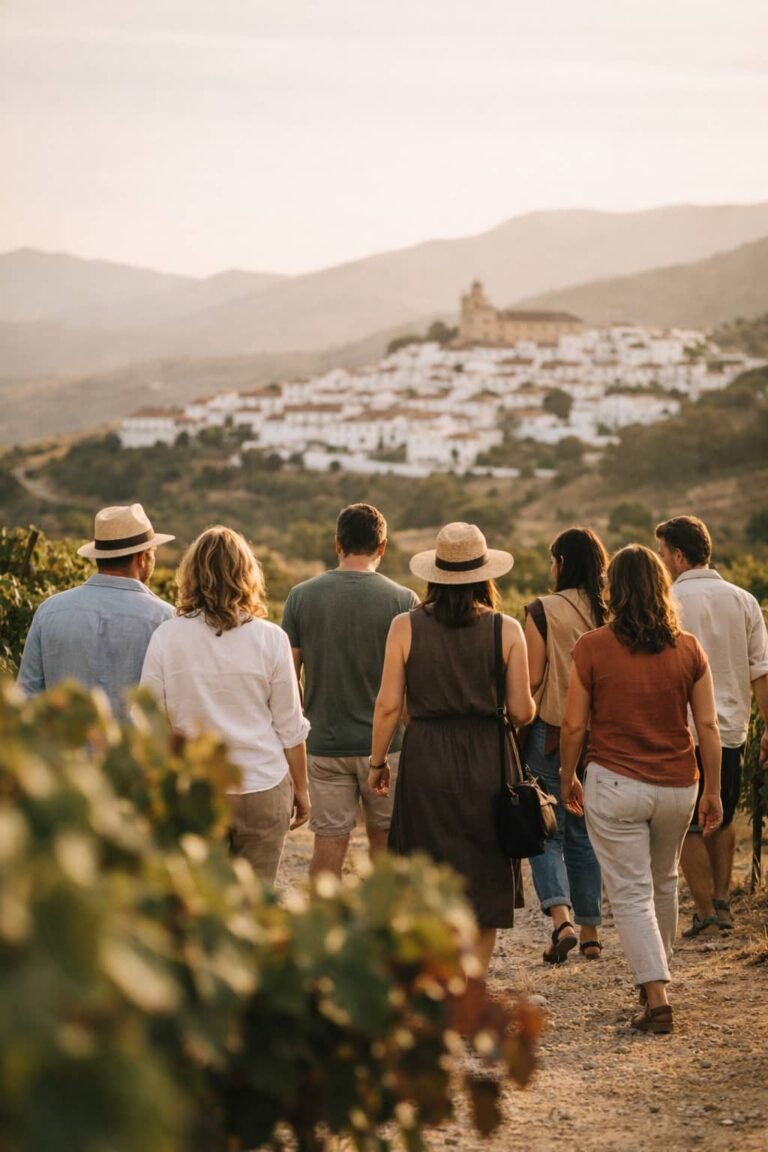
D.O. Malaga is the historic name behind the province’s sweet and naturally sweet wines, especially those made from Moscatel and Pedro Ximenez. It is the best starting point for travellers who want to understand why Malaga became famous as a wine city long before modern dry reds arrived.
Region guide
Drive west from Málaga toward Ronda, with the final approach climbing into the Serranía before reaching the town and nearby vineyards.
Spring and autumn, when the mountain light is clear and vineyard temperatures are comfortable.
Ronda is the best-known modern red-wine area in Málaga, with small bodegas working high vineyards around 700 to 900 metres above sea level. The landscape is part of the experience: vineyard roads, limestone hills and the Tajo gorge near Puente Nuevo give the region a distinctly Andalusian mountain character.
Use the confirmed winery for the selected tour date; small producers can vary by availability.
Ronda is best known for boutique dry red wines under D.O. Sierras de Málaga, often made with Syrah, Cabernet Sauvignon, Tempranillo and Petit Verdot.
Ronda is roughly 100 km west of Málaga and usually takes about 1 hour by road, depending on the exact pickup point and winery.
Spring and autumn are especially comfortable, with clear mountain views and milder temperatures than mid-summer.
Drive east from Málaga toward the Axarquía villages, then climb narrow mountain roads toward slate vineyards and whitewashed towns.
Axarquía is steep, sunlit Moscatel country in Malaga, where vines grow on pizarra slate slopes above white villages such as Cómpeta, Frigiliana and Sayalonga. The area is tied to sweet and naturally sweet Málaga wines as well as the raisin tradition protected by D.O. Pasas de Málaga.
Axarquía is known for Moscatel de Alejandría, grown on steep slate slopes and used for sweet, naturally sweet and raisin-linked styles.
Common reference villages include Cómpeta, Frigiliana and Sayalonga, though the exact route depends on the winery and pickup point.
Most Axarquía wine routes are about 45 to 60 minutes east of Málaga, with extra time possible on mountain roads.
Leave the city toward the Sierras de Málaga natural park, where mountain roads rise quickly from the urban edge.
Year-round, especially spring and autumn for comfortable walks and clear views above the city.
Sierras de Málaga is the most accessible historic wine area from the city, closely associated with traditional sweet Málaga wines. The route rises quickly into the Sierras de Málaga natural park, where Pedro Ximénez and Moscatel connect today’s visits with the the province long wine history.
Yes. It is usually the closest of the five routes, often around 25 to 40 minutes from Málaga depending on the exact winery.
The area is associated with historic sweet Málaga wines, especially styles based on Pedro Ximénez and Moscatel.
Often yes, because travel time is shorter than the more distant mountain and coastal regions. The exact timing depends on the selected bodega.
Follow the coast southwest from Málaga toward Estepona and Manilva, where vineyards sit close to the Mediterranean.
Spring and autumn for mild coastal weather; early-day summer visits are usually more comfortable.
Manilva brings Málaga wine country to the coast, with Moscatel vineyards near the Mediterranean and Estepona. Compared with the inland mountain areas, the setting feels brighter and maritime, giving visitors a different expression of the same historic grape.
Manilva is the coastal Moscatel area, with vineyards close to the Mediterranean rather than in the inland mountains.
Manilva is about 1 hour southwest of Málaga by road, depending on traffic and the exact pickup point.
Yes. Its western Costa del Sol location can be especially practical for guests based near Estepona or Manilva.
Drive north from Málaga toward Antequera, passing from the coast into a cooler inland landscape near El Torcal.
Spring and autumn, when inland temperatures are mild and the landscape around Antequera is especially rewarding.
Norte / Antequera is the inland counterpoint in Malaga to the coast, with higher-altitude vineyards, cooler nights and dry reds under D.O. Sierras de Málaga. The route can pair wine country with major cultural and natural landmarks such as the Antequera dolmens and El Torcal.
The area is associated with higher-altitude inland reds under D.O. Sierras de Málaga, including Tempranillo and Syrah.
Most routes north toward Antequera take about 45 to 60 minutes from Málaga, depending on pickup point and winery location.
It can be possible on a private itinerary, but the exact combination depends on timing, winery availability and the pace you want for the day.
Routes vary by producer: some head west toward Ronda, others north toward Antequera or into mountain areas closer to Malaga.
Sierras de Malaga is the D.O. for modern dry wines in the province, connecting mountain reds, inland vineyards and selected dry white styles under one official designation. For travellers, it is the clearest way to understand the contemporary side of Malaga wine beyond the historic sweet wines.
Expect structured reds, fresher mountain profiles and some dry white expressions depending on the producer.
It is the official designation for modern dry wines from Malaga province, including mountain and inland wine areas such as Ronda and Antequera.
D.O. Sierras de Malaga focuses on dry wines, while D.O. Malaga is historically associated with sweet and naturally sweet styles.
Yes, but travel time depends on the producer and zone. Many routes are around 45 to 60 minutes or more from the city.
Routes can lead toward Axarquía, Manilva or historic hills close to the city, depending on the winery and wine style.
D.O. Malaga is the historic name behind the province’s sweet and naturally sweet wines, especially those made from Moscatel and Pedro Ximénez. It is the best starting point for travellers who want to understand why Malaga became famous as a wine city long before modern dry reds arrived.
D.O. Malaga is best known for sweet and naturally sweet wines, especially from Moscatel and Pedro Ximénez.
No. D.O. Malaga is the historic sweet-wine designation, while D.O. Sierras de Malaga covers modern dry wines.
Yes, many Malaga wine experiences include Moscatel, Pedro Ximénez or other wines linked to the historic designation. Exact wines depend on the selected tour.
Region character
D.O. Malaga protects the classic sweet and naturally sweet wine identity of the province.
These two grapes are the essential reference points for understanding the designation.
Sun, slopes and coastal influence all shape the traditional sweet-wine styles.
Grapes & style
D.O. Malaga belongs to D.O. Malaga, with sweet and naturally sweet malaga wines as the signature style for travellers to understand first.
Bodegas
The exact D.O. Malaga producer is confirmed according to date, route and winery availability.
An additional producer may be included when the selected route and availability allow it.
Featured tours
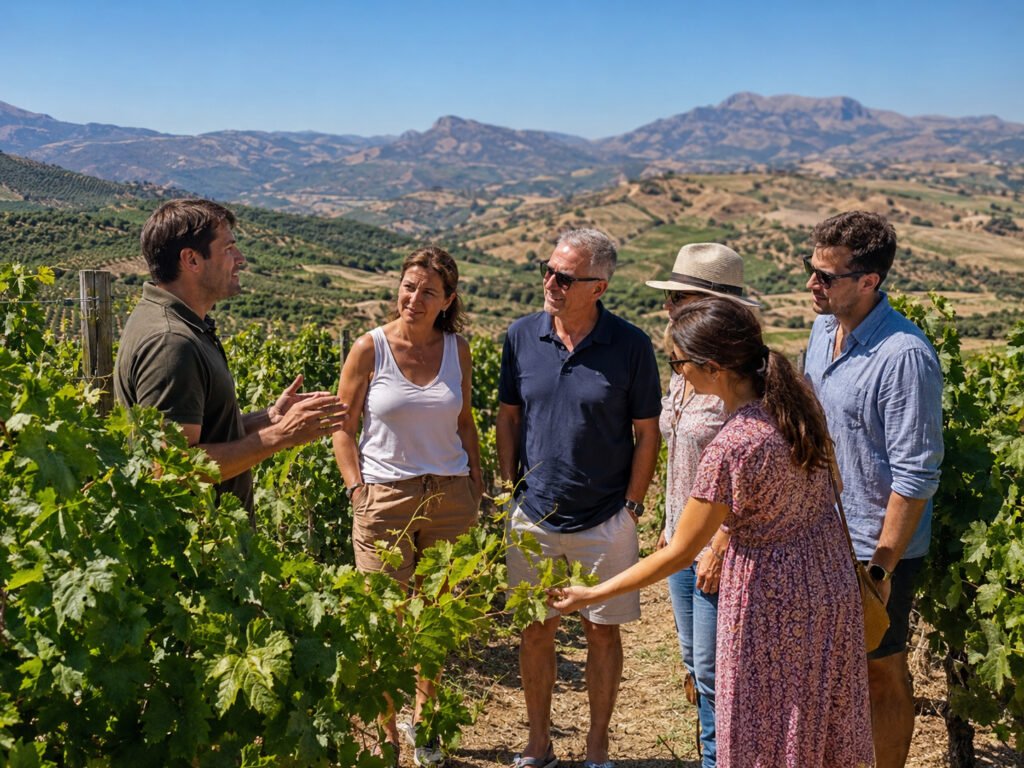
Local wine, generous tapas, and stories from the people who know Malaga best.

Explore the Wine Museum, Nilva Winery and the Peñoncillo Vineyard, then taste local Moscatel wines with tapas overlooking the Mediterranean.

A private Malaga wine tour is a tailor-made, exclusive wine experience for your group only — with private hotel or cruise-port pickup, custom winery choices, an expert host and a maximum of about 8 guests. Ideal for couples, families, friends and corporate events.
Practical info
25 to 60 minutes from Malaga, depending on the producer
Routes can lead toward Axarquia, Manilva or historic hills close to the city, depending on the winery and wine style.
Spring and autumn; harvest timing varies by grape, altitude and coastal influence.
FAQ
D.O. Malaga is best known for sweet and naturally sweet wines, especially from Moscatel and Pedro Ximenez.
No. D.O. Malaga is the historic sweet-wine designation, while D.O. Sierras de Malaga covers modern dry wines.
Yes, many Malaga wine experiences include Moscatel, Pedro Ximenez or other wines linked to the historic designation. Exact wines depend on the selected tour.
Ready when you are
Join a small group, meet a local host and discover the Malaga most visitors never see.